The POWER Project: Providing Opportunities for Women in Entrepreneurship and Reproductive Health in Uganda
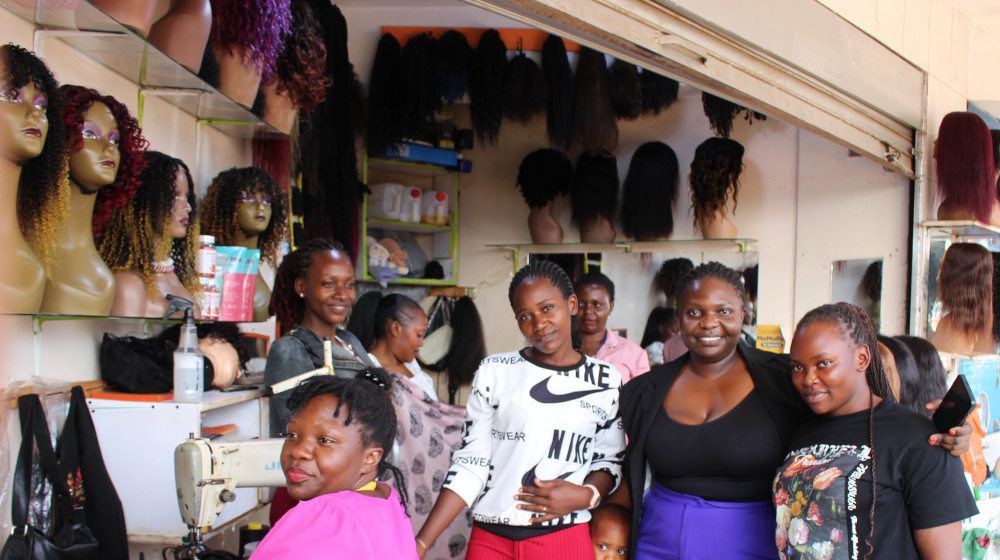
The POWER project was established by Action 4 Health Uganda (a Ugandan non-governmental organisation) to support women business leaders who have developed innovative solutions to address unmet needs in family planning/sexual and reproductive health and rights services and information for young people in Uganda. The project involves training, coaching, and mentorship of young business leaders, and afterwards, the top business solutions are supported financially to be scaled up through the Multi-sectoral Investment Fund.
CONTINENT
Africa
COUNTRY
Uganda
Continent
Africa
Country
Uganda
Actors Involved
Organisation, partners, community
Founding year
2017
Health focus
Sexual & Reproductive Health, Family Planning
Programme Focus
Health financing
Health System Focus
Reproductive health
CHALLENGES
Globally, Uganda has one of the youngest populations with nearly half of them aged below 15 years, and this is due to a historically high and constant fertility rate of about 6.7 children per woman, according to the Uganda Vision 2040. Likewise, 73.2% of Uganda’s young population is below 30 years and this presents both opportunities and challenges in meeting the demand for family planning and sexual and reproductive health services.
The young people really have limited access to sexual and reproductive services because they have no income or no socioeconomic capacity. They told us that they are not able to buy the commodities or products. Sometimes they do not have transport to go to the health centers because they are in rural settings. But also the fact that many of them are in school, and of course, really, they do not have money or resources. Therefore, there is a risk when these young people have sexual encounters…
– Mrs. Sarah Kintu, CEO, A4HU
INTERVENTION
Since its establishment, A4HU focuses on youth empowerment through dedicated mainstreaming of youth in socio-economic development and promoting sexual and reproductive health (SRH).
In line with its mission of providing young people with the resources that they need to access SRH services, and live free from violence and improve their livelihoods, A4HU established the POWER project. This project is an accelerator programme that nurtures and grows women social entrepreneurs towards the development of sustainable businesses in the fields of family planning and sexual reproductive health and rights (FP/SRHR).
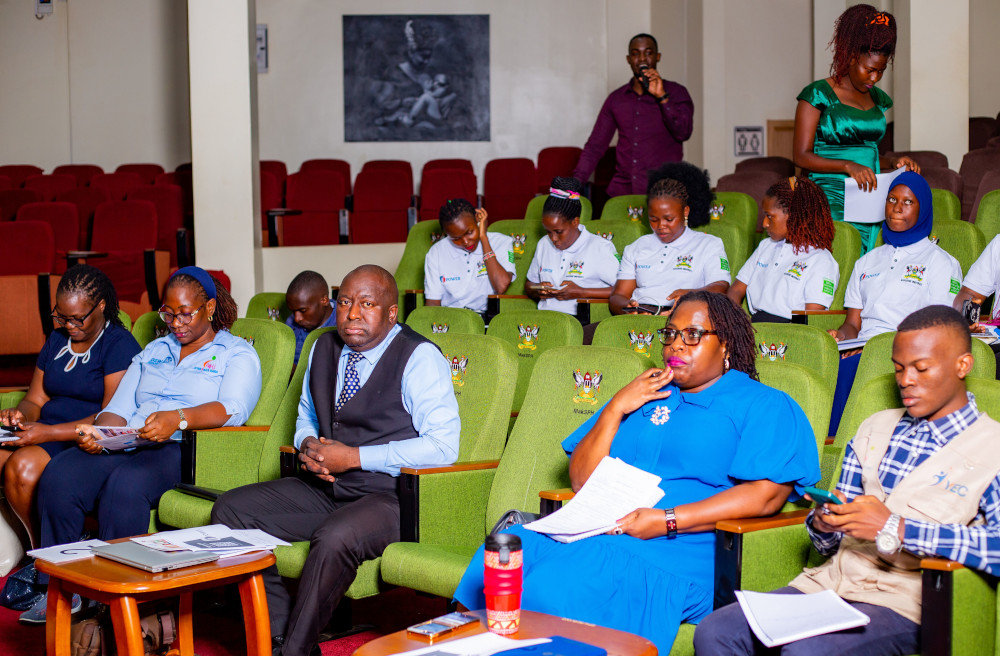
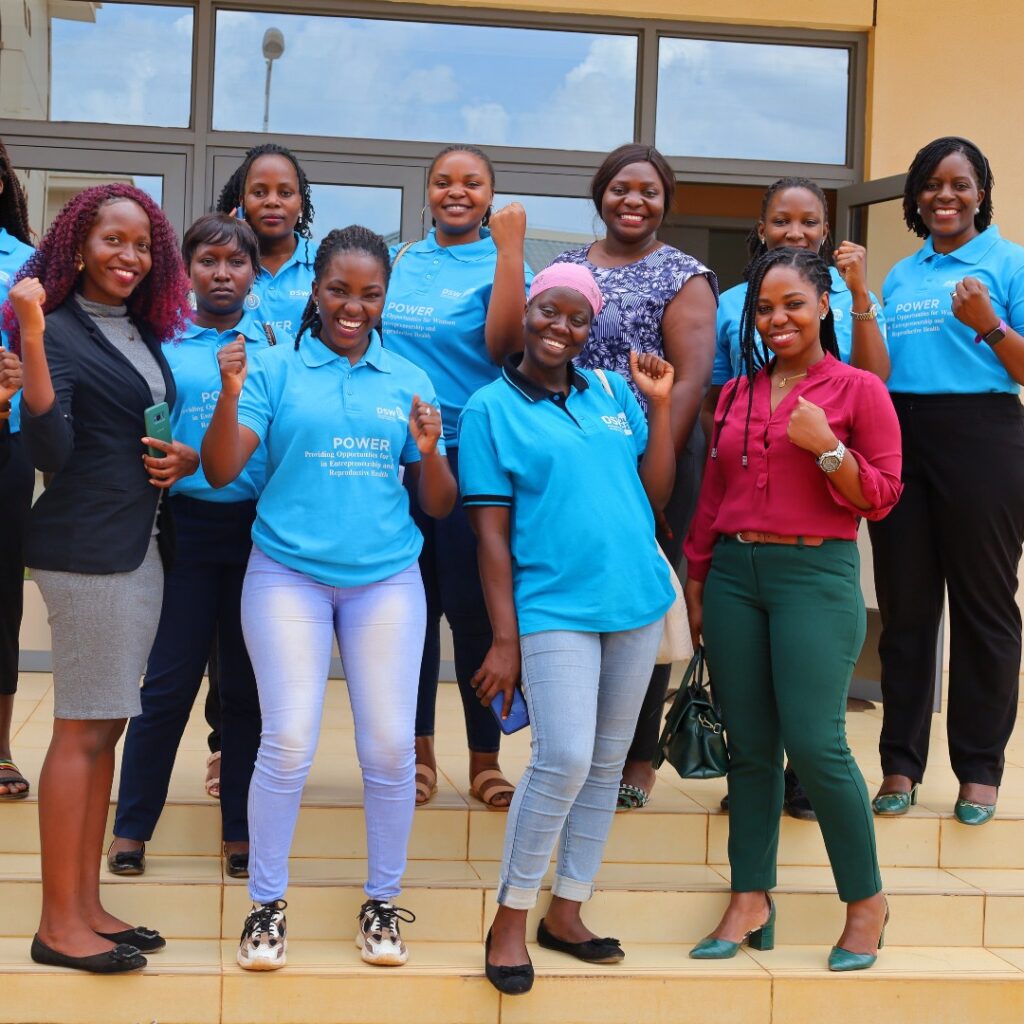
The POWER project provides capacity building, mentorship, and coaching to women business entrepreneurs.
A4HU has a multi-sectoral fund which assesses the investment readiness of the women business entrepreneurs and offers them investment financing to enhance and grow their social enterprises.
We provide information to the young people. We train peer facilitators, encourage peer-to-peer exchange of information and interaction. So we have trained over 1,200 peer educators to support fellow young people to access information on SRHR. When young people are provided with the right SRHR information, they are empowered to make right health SRHR choices. Their negotiation skills are also enhanced. We use our training center to train the peers, who then cascade the knowledge to the communities.
– Ms. Miriam Cherukut, Program Manager, A4HU
IMPACT
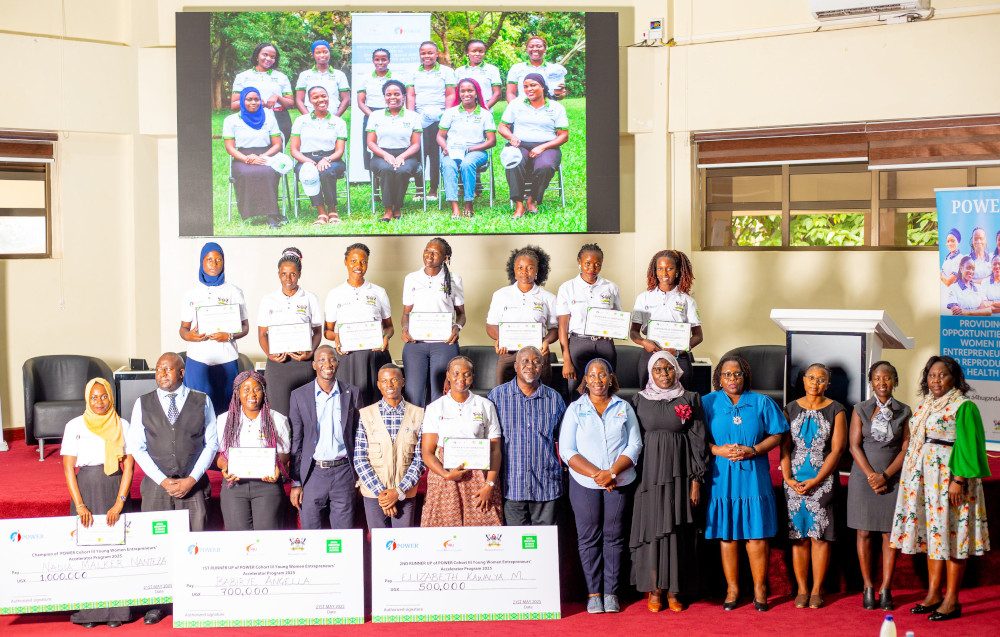
To date, the POWER project has so far trained, mentored, and launched 12 women business start-ups. The project has equipped 10,275 young people with FP/SRHR information and products to make informed choices about their sexual reproductive health choices since 2022.
So far EUR 300,000 (UGX 1.2 billion) has been raised in grant financing to support the 12 POWER startups in Uganda since 2023, and this has created 96 employment opportunities for the young people in the POWER startups since 2022.
CASE INSIGHTS
- Access to SRHR and family planning products and services in Uganda can be promoted by use of young women business leaders, and the different line ministries in Uganda and other countries should establish policies and strategies to replicate this innovation.
- Training, mentoring and coaching of young women business leaders in SRHR and entrepreneurship is very key in ensuring growth and sustainability of their social business enterprises. This can be adopted in the different wealth-creation programs and policies in Uganda and beyond to enable sustainability of such programs.
- Provision of startup funding and financing to trained young women business leaders is a key strategy for kick-starting their startups and ensuring their survival, and should be adopted in different government policies and programs in Uganda and beyond.
- Engaging already trained young women business leaders to train and coach their fellow young women is key in ensuring knowledge dissemination. This could be leveraged in other government wealth-creation programs.