Social, Emotional, and Economic Empowerment Through Knowledge of Group Support Psychotherapy (SEEK-GSP) Project, Uganda
Using a culturally sensitive group support psychotherapeutic (GSP) intervention as first-line treatment for depression among people living with HIV/AIDS in Uganda.
CONTINENT
Africa

COUNTRY
Uganda
Continent
Africa
Country
Uganda
Website
www.seek-gsp.org
Founding year
2012
Organizational structure
Not for profit
Health focus
Mental health, HIV/AIDS
Programme Focus
Service Delivery
Health System Focus
Health Promotion, Service Delivery
CHALLENGES
Mental health disorders, especially depression, are now recognised as major contributors to global morbidity. Among people living with HIV (PLHIV), depression is two to four times more prevalent than in the general population. In sub-Saharan Africa, as many as one in three PLHIV show symptoms of depression, and one in five have diagnosable clinical depression. Estimates range from 8–32% depending on the setting. Depression undermines HIV treatment outcomes: it is associated with poor antiretroviral therapy (ART) adherence, increased risk of treatment failure, development of drug resistance, and even when viral load is suppressed, higher mortality. Despite these harms, many HIV treatment sites do not screen for or manage depression among PLHIV.

We realised that patients were coming from the HIV clinics that were scattered all over the country and we realised there was no mental health care in those clinics. …so they (patients) progressed to become severe and it is only when the person became overtly psychotic and were shouting or attempting suicide that the health workers were able to notice. And the action then was to refer to Butabika Hospital. Then I realised we need to research mental health in HIV centres that are scattered around the country.
– Dr. Etheldreda Nakimuli-Mpungu, Principal Investigator
INTERVENTION
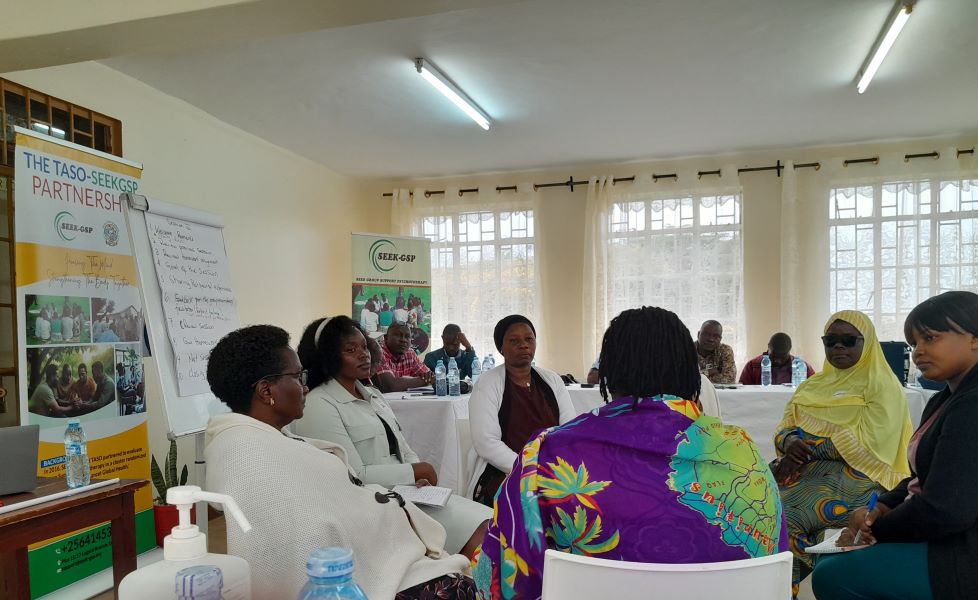
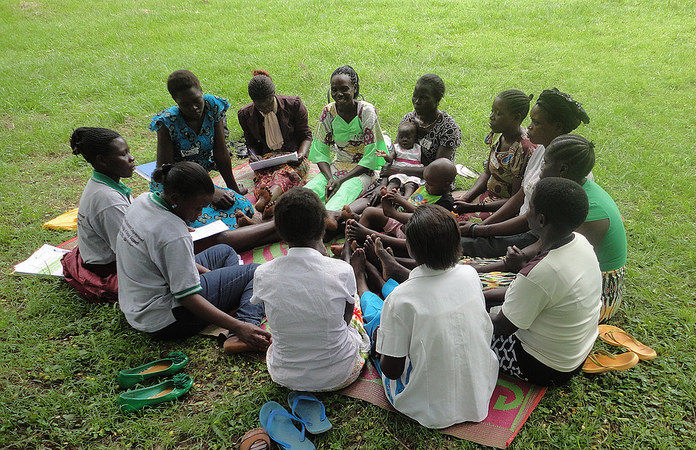
The project involves group support psychotherapy (GSP) sessions delivered by trained lay health workers, with support from healthcare workers at the health facilities. The sessions help treat depression among people living with HIV by enhancing their emotional and social support networks, their ability to practice positive coping skills, and their income-generating skills. The sessions are gender-specific and facilitated by trained lay health workers of the same gender because problems faced by men and women differ.
This project was formed after the successful development and testing of group support psychotherapy, a culturally sensitive psychological treatment that we use as a first line treatment for depression among persons living with HIV/AIDS.
– Dr. Etheldreda Nakimuli-Mpungu, Principal Investigator
IMPACT
The project team conducted a 109-person pilot randomised clinical trial (RCT) that evaluated group support psychotherapy for depression treatment in people with HIV/AIDS in Northern Uganda. The findings showed that six months after the end of treatment, participants in the intervention (GSP) arm had lower mean depression scores compared to those in the control (group HIV education, GHE) arm (Nakimuli-Mpungu et al., 2015). Hence, GSP was more effective than the control intervention in reducing depression symptoms and increasing functioning levels.

CASE INSIGHTS
Rather than creating parallel mental health services, the SEEK-GSP model integrates group psychotherapy into existing HIV care systems. In Uganda, this meant embedding GSP into HIV treatment clinics, adding mental health indicators to HIV treatment cards, and formally including GSP in the National HIV Treatment Guidelines. Once mental health is normalised within HIV platforms, scale-up becomes more feasible, costs are shared, and the services become part of routine care rather than add-ons. One of the most practical innovations of SEEK-GSP is that lay health workers are trained to lead the group therapy sessions, while facility-based health staff provide supervision. For policymakers, the actionable insight is that with the right training, tools, and supervision framework, non-specialists can deliver effective psychosocial care. This means that scaling mental health services does not require proportionate increases in psychiatrists or psychologists—but rather investment in capacity building and oversight.